Tether Reserve Risk? Breaking Down the Arthur Hayes FUD & What Traders Should Actually Watch (Affmiss On-chain / Macro Daily)
Affmiss On-chain / Macro Daily – Liquidity, Stablecoins & Market Signals
Tether Reserve Risk Explained: Breaking Down the Arthur Hayes FUD & The Real Stability Outlook
A data-driven analysis on USDT reserves, Bitcoin exposure, gold volatility, macro liquidity,
and the broader implications of the “Tether reserve risk” narrative.
1. Understanding the Latest “Tether Reserve Risk” Controversy
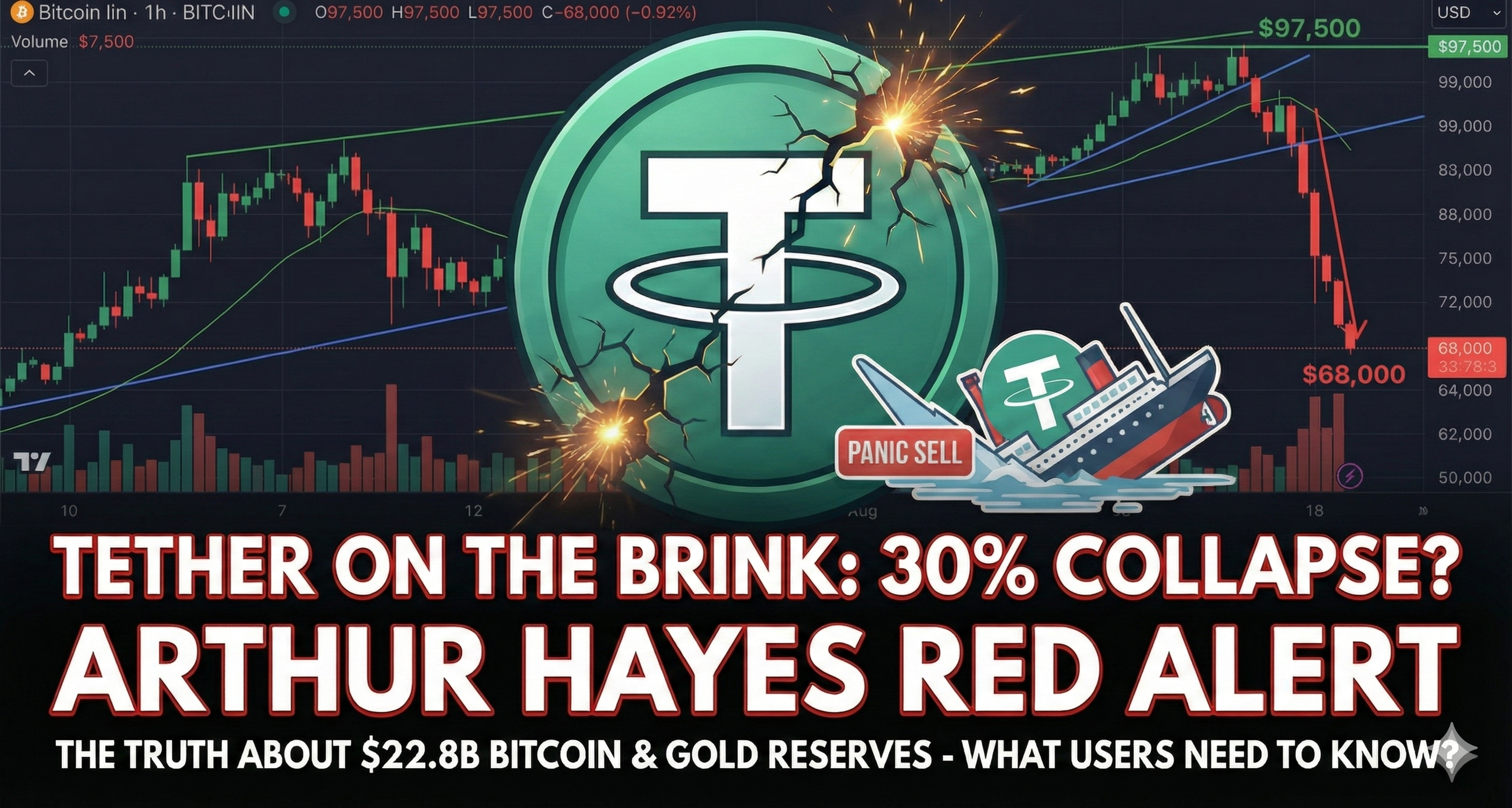
The crypto market woke up to a fresh wave of anxiety after Arthur Hayes,
former CEO of BitMEX, suggested that Tether (USDT) could face a potential
reserve shortfall if Bitcoin or gold declines by around 30%.
This quickly evolved into a market-wide debate around tether reserve risk.
Hayes based his claim on Tether’s latest attestation report (not a full audit),
which shows asset composition, liabilities, and excess reserves for Tether International —
the issuing entity behind USDT.
2. What the Tether Attestation Really Shows (Assets vs. Liabilities)
The October 31 attestation highlights the following reserve structure:
- Total Assets: approx. $181.2B
- USDT Liabilities / Circulation: approx. $174.4B
- Excess Reserves: approx. $6.78B (buffer)
- Non-Treasury Risk Assets: approx. $22.8B in
Bitcoin + gold
Hayes’ claim:
If BTC + gold fall 30%, the $22.8B allocation would lose around $6.8B,
nearly equal to Tether’s $6.78B excess buffer.
That overlap is the foundation of the “tether reserve risk” argument.
However, this analysis only captures one entity —
not the entire Tether Group.
3. Why This Does Not Automatically Mean Tether Is Unsafe
The attestation reflects only Tether International,
not the combined financial strength of the Tether Group.
According to public statements and interviews from Tether executives:
- The broader Tether Group reportedly earns over $10B/year
from U.S. Treasury yields. - The Group holds an estimated $30B in shareholder equity and other assets
outside of the attestation. - These assets can theoretically be injected into reserves during liquidity stress.
This larger capital structure explains why Tether survived multiple extreme market events:
- 2018 liquidity crunch
- Luna/UST collapse in 2022
- 2023 regional bank crisis
- USDT redemptions exceeding $10B+ within weeks
Most importantly, Tether has never publicly refused a 1:1 redemption request.
Peg deviations have occurred — but always recovered.
4. Transparency, Attestations & Why Big4 Firms Avoid Tether
A key criticism in the “tether reserve risk” narrative is the lack of a full Big4 audit.
Tether’s auditing partner is BDO, a top-5 global audit firm.
However, it’s widely known that Big4 firms avoid high-risk crypto entities due to:
- Reputational risk after the Enron / Arthur Andersen collapse.
- Complex on-chain verification challenges.
- Legal and regulatory uncertainties around reserves and custody.
- The asymmetric downside of auditing a non-public, offshore stablecoin issuer.
In other words, even if Tether wanted a full Big4 audit, they would likely be denied
due to risk policies — not necessarily because they lack reserves.
5. Is This FUD or a Valid Warning? The Balanced View
Risks that are real:
- Large exposure to Bitcoin + gold introduces volatility
- Attestation ≠ full audit
- Unverified claims of $30B group-level capital
- Opacity around Tether’s internal capital allocation
Strengths Tether actually has:
- Massive recurring Treasury yield income (~$10B/year)
- Strong redemption track record under stress
- Group-level capital far exceeding excess reserves
- Dominant liquidity role across global spot + derivatives markets
The truth:
This is not an imminent-collapse scenario — but it is a structural risk investors must monitor.
6. Macro Landscape: Liquidity, Oil, Fed, and Institutional Flow
• OPEC+ Keeps Oil Production Flat for 2026
Brent remains weak near $63. Lower oil = lower inflation pressure → supportive for risk assets.
• Fed Officially Ends Quantitative Tightening
Starting December 1, the Fed stops shrinking its balance sheet.
A direct positive for liquidity-sensitive assets like BTC.
• MicroStrategy Likely Accumulating More Bitcoin
Institutional demand stays robust — another tailwind for long-term holders.
• Nasdaq Pushes for Tokenized Stock Trading
One of the largest exchanges globally seeks SEC approval to tokenize real equities.
A major milestone toward regulated on-chain finance.
• United Kingdom Tightens Crypto Tax Reporting (2026)
All UK crypto platforms will be required to report domestic user activity —
signaling the global shift toward oversight and transparency.
7. Key Takeaways for Traders & Investors
- USDT remains effective for trading — but should not be the sole long-term store of funds.
- Diversify stable exposure: USDT, USDC, fiat, BTC, tokenized T-bills.
- Arthur Hayes provides valuable stress tests, but often magnifies extremes for trading edges.
- Macro environment is not aligned with a systemic liquidity collapse narrative.
The real story is not panic — it is about understanding information gaps
and monitoring reserve composition.
