AI Tokens Explained: The Intersection of Artificial Intelligence and Blockchain
Estimated reading time: 10 minutes
Key Takeaways
- AI tokens exist at the emerging intersection of artificial intelligence and blockchain technology.
- They power, govern, and incentivize decentralized AI applications and data marketplaces.
- There’s a distinction between “AI tokens” in the crypto/blockchain context and in language models.
- Top projects include SingularityNET, Fetch.ai, Ocean Protocol, Render Network, and The Graph.
- Investors should carefully assess fundamentals and be skeptical of hype-heavy projects.
- Opportunities exist for staking, governance, and affiliate earnings with leading AI tokens.
Table of Contents
What Are AI Tokens and How Do They Work in Blockchain?
AI tokens are digital assets issued on blockchains that enable, power, or incentivize AI-related applications and ecosystems. Unlike conventional cryptocurrencies that primarily function as mediums of exchange, AI tokens serve a dual purpose in the technological landscape.

The term “AI token” is used in two distinct contexts:
- Blockchain/Crypto Context: Digital assets that power AI projects in the Web3 space
- Language Model Context: Units of text processing in AI systems like GPT and BERT
In the blockchain world, AI tokens function as the lifeblood of decentralized artificial intelligence platforms, creating economic incentives that drive innovation and participation in these ecosystems.
For readers just starting out with blockchain, Blockchain Basics provides a helpful overview.
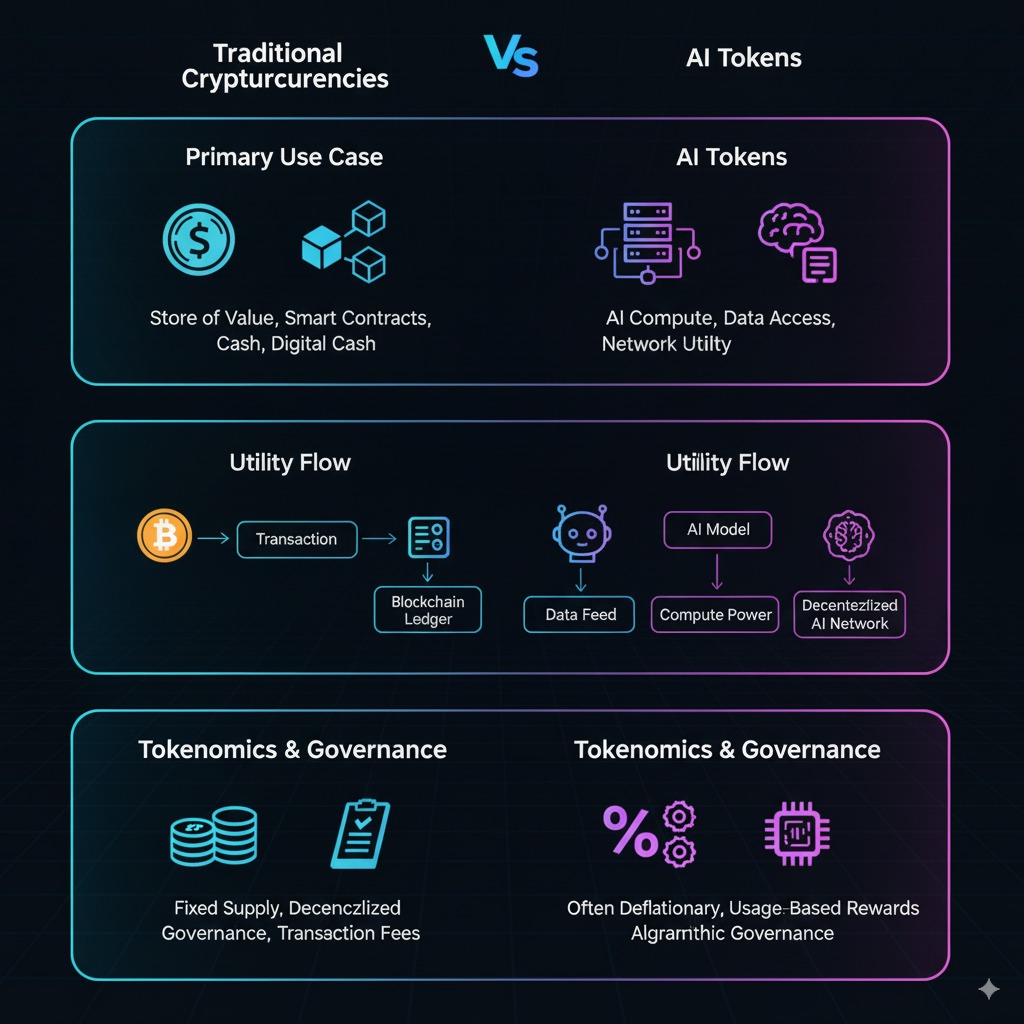
How Do AI Tokens Differ From Regular Cryptocurrencies?
While Bitcoin and Ethereum serve as general-purpose cryptocurrencies, AI tokens are specialized assets designed with specific functionalities related to artificial intelligence:
| Feature | Regular Cryptocurrencies | AI Tokens |
|---|---|---|
| Primary Purpose | General medium of exchange or store of value | Power AI ecosystems and applications |
| Technical Focus | Transaction processing and security | Decentralized AI applications and governance |
| Use Cases | Payments, remittances, investments | AI model access, data marketplaces, compute resources |
| Value Drivers | Adoption, scarcity, utility | AI technology advancements, data quality, computational innovation |
“Regular cryptocurrencies aim to replace or supplement traditional financial systems, while AI tokens create entirely new economic models around artificial intelligence capabilities,” explains AI and blockchain researcher Alex Martinez.
For the full breakdown of cryptocurrency types, see Types of Cryptocurrencies.
What Are the Key Use Cases for AI Tokens?
AI tokens serve multiple critical functions within their ecosystems:
- Payment Mechanism: Users can purchase AI services such as running machine learning models, accessing datasets, or renting computational hardware using these tokens.
- Incentivization Framework: Tokens reward ecosystem participants for valuable contributions:
- Sharing high-quality datasets
- Contributing computational resources
- Building AI applications on the platform
- Improving AI algorithms through research
- Governance Vehicle: Token holders gain voting rights on proposals that shape the platform’s development, policies, and resource allocation.
- Security Enhancement: Many AI tokens incorporate advanced fraud detection mechanisms and security features that leverage artificial intelligence to protect the network.
For a closer look at how security impacts cryptocurrency platforms, visit Crypto Exchange Security Guide 2025: Regulations & Safety Measures.
“The beauty of AI tokens lies in their ability to align incentives among diverse stakeholders in the AI development process,” notes crypto economist Sarah Johnson. “They create a marketplace where everyone from data providers to model developers can be fairly compensated.”
What Are the Top AI Tokens to Watch in 2023?
Which AI Tokens Have Shown the Strongest Growth?
Several AI tokens have demonstrated remarkable performance as the fusion of AI and blockchain gains momentum:
- SingularityNET (AGIX) – Created by Ben Goertzel’s team, this decentralized AI marketplace has seen substantial growth as its AI-as-a-service model gains adoption.
- Fetch.ai (FET) – This platform for autonomous economic agents has attracted attention for its innovative approach to creating AI-powered digital representatives that can transact on behalf of users.
- Ocean Protocol (OCEAN) – Focused on unlocking data for AI, Ocean has established itself as a leader in the data marketplace sector.
- The Graph (GRT) – While not exclusively AI-focused, GRT powers indexing services that many AI applications rely on for blockchain data analysis.
- Render Network (RNDR) – Specializing in decentralized GPU rendering, Render Network has seen growing demand as AI visual generation requires intensive computational resources.
If you want to start buying or trading these AI tokens, understanding Crypto Exchanges and how to pick the Best Crypto Exchange is essential.
What Unique Features Do Leading AI Tokens Offer?
| Token | Unique Value Proposition | Key Differentiator |
|---|---|---|
| SingularityNET (AGIX) | Decentralized AI services marketplace | Interoperability between AI algorithms |
| Ocean Protocol (OCEAN) | Data marketplace for AI | Compute-to-data technology that preserves privacy |
| Fetch.ai (FET) | Autonomous AI agent network | Self-learning agents that can negotiate and transact |
| Render Network (RNDR) | Decentralized GPU rendering | Specialized for AI-generated visual content |
| The Graph (GRT) | Indexing protocol for blockchain data | Makes blockchain data accessible to AI systems |
For helpful tips on trading features relevant to AI tokens, see Trading Features on Exchanges: Complete 2025 Guide.
“What makes these tokens interesting is that they’re not just riding the AI hype wave—they’re solving concrete problems in how AI systems access data, computational resources, and interact with users,” explains blockchain analyst Michael Thompson.
How Can Investors Evaluate AI Token Projects?
What Are the Key Metrics to Assess AI Token Fundamentals?
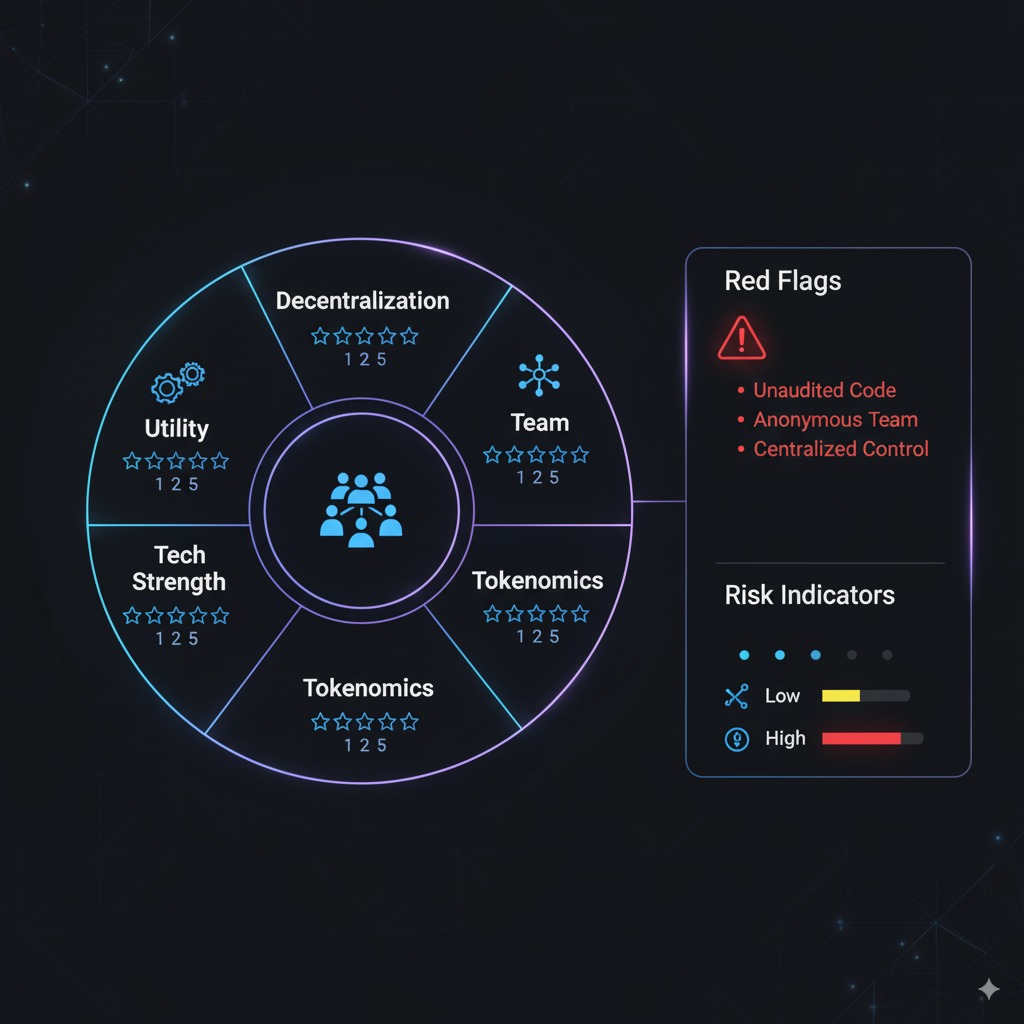
When evaluating AI token projects, consider these essential metrics:
- Team Expertise: Does the team have backgrounds in both AI and blockchain? Previous successes?
- Technology Validation: Has the AI technology been peer-reviewed or demonstrated actual capabilities beyond whitepaper promises?
- Token Economics: How are tokens distributed? Is there a sustainable economic model that doesn’t rely solely on speculation?
- Network Effects: Does the platform become more valuable as more users join? What is the current adoption trajectory?
- Real-World Implementation: Are there actual use cases already in production, or is everything still theoretical?
- Developer Activity: Check GitHub repositories for consistent development and community engagement.
For a foundational understanding of evaluating digital assets, see Digital Assets: Beginner’s Guide to Cryptocurrencies & Tokens (2025).
“Looking at GitHub commits, technical documentation quality, and whether the team can explain their technology in simple terms without resorting to buzzwords are my first steps in evaluating AI token projects,” shares crypto investment advisor Elena Rodriguez.
What Red Flags Should Investors Watch For?
Be cautious of projects displaying these warning signs:
- Excessive Hype: Projects that focus more on marketing AI capabilities than demonstrating working technology.
- Vague Technical Documentation: Whitepapers filled with buzzwords but lacking specific implementation details.
- Centralized Token Distribution: A small group of insiders holding the majority of tokens.
- Unrealistic Promises: Claims of “solving AGI” (Artificial General Intelligence) or other breakthroughs without credible research backing.
- Lack of Technical Progress: Projects that haven’t updated their codebase or demonstrated working prototypes after months or years.
For new investors, reading the Risks of Crypto Investment: What Beginners Must Know in 2025 is highly recommended.
“The intersection of AI and crypto attracts both brilliant innovators and opportunistic marketers. Learn to distinguish between projects that use AI as a marketing gimmick and those genuinely advancing the field,” warns investment analyst David Chen.
What Role Do AI Tokens Play in Language Models?
How Does Tokenization Impact AI Performance?
In natural language processing (NLP), tokens are the fundamental units that AI systems process:
- Text Chunking: Tokenization breaks text into manageable pieces:
- Word-level: “Artificial Intelligence is evolving rapidly.” → [“Artificial”, “Intelligence”, “is”, “evolving”, “rapidly”, “.”]
- Subword-level: “Artificial” → [“Art”, “ificial”]
- Character-level: “AI” → [“A”, “I”]
- Vocabulary Management: Tokenization determines how many unique “words” an AI model knows.
- Efficiency Balancing: Smaller token sizes increase processing precision but require more computational resources.
- Multilingual Capabilities: Advanced tokenization enables models to process multiple languages efficiently.
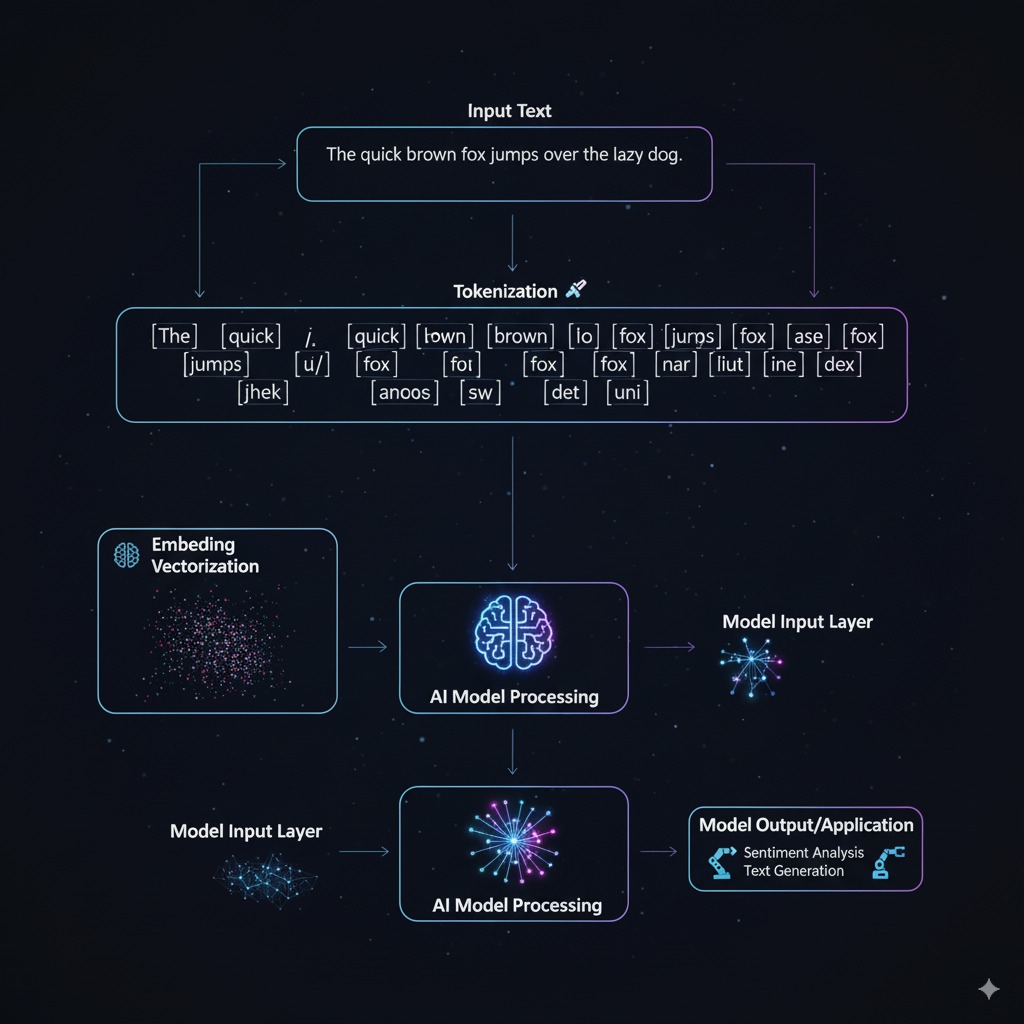
“The way text is tokenized fundamentally shapes how AI models understand language. It’s the foundation upon which all language AI is built,” explains computational linguist Dr. Rachel Kim.
This dual meaning of “tokens” creates an interesting convergence: the tokenization methods used in language models directly impact the performance of AI systems that blockchain AI tokens aim to decentralize. Learn more about the basics of cryptocurrency’s technical underpinnings in the Blockchain Basics guide.
How Can You Build Passive Income With AI Tokens?
What Staking and Yield Opportunities Exist?
Many AI tokens provide staking mechanisms that reward long-term holders:
- Governance Staking: Lock tokens to participate in governance decisions and earn rewards.
- Resource Provision: Stake tokens while providing computational resources or data to the network.
- Liquidity Provision: Supply tokens to decentralized exchanges and earn trading fees.
- Prediction Markets: Some AI platforms reward accurate predictions about AI developments or market trends.
“The most sustainable passive income strategies in the AI token space involve actually participating in network operations rather than purely speculative activities,” advises crypto income strategist Robert Williams.
To learn about the fundamentals of earning passive income with digital assets, check out our detailed Crypto Staking Guide 2025: Earn Up to 20% APY Passive Income.
How Can Affiliate Programs Leverage AI Tokens?
For affiliate marketers and content creators, AI tokens present unique opportunities:
- Platform-Specific Programs: Many AI token projects offer affiliate programs for bringing in new users or developers.
- Educational Content Creation: Create content explaining AI token concepts and earn through associated affiliate links.
- Tool Development: Build applications that use AI tokens and earn revenue through token incentives.
- Community Building: Establish communities around specific AI token ecosystems and monetize through collaborative opportunities.
Affiliate marketers looking for inspiration should review Crypto Affiliate Program: Complete Guide to Earning Commissions in 2025 for insight into the structure and earning potential within the crypto ecosystem.
“The most successful affiliate marketers in the AI token space are those who truly understand the technology and can explain its benefits to specific audiences,” notes digital marketing expert Lisa Chen.
The Future of AI Tokens: Convergence and Opportunity
As we look ahead, the distinction between AI tokens in cryptocurrency and AI language model tokens continues to blur. Projects are emerging that use blockchain-based AI tokens to incentivize improvements in tokenization algorithms for language models.
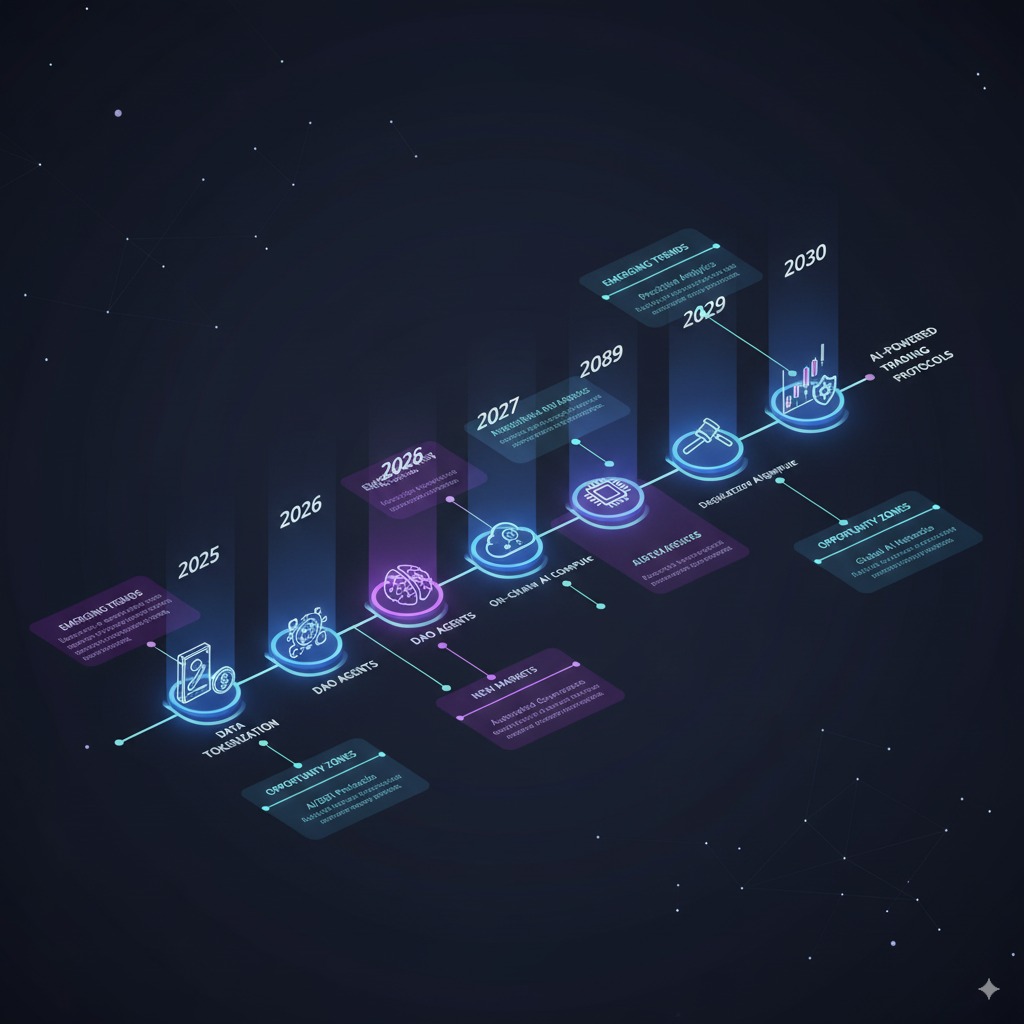
This convergence represents the next frontier: AI systems that can evolve through decentralized contributions, rewarded by economic incentives encoded in tokens.
For context on how AI, DeFi, and Web3 are shaping the future of exchanges and tokenization, read Future of Crypto Exchanges 2025: AI, DeFi & Web3 Evolution.
“We’re witnessing the early stages of a profound shift where artificial intelligence becomes increasingly decentralized, collaborative, and accessible,” concludes AI researcher Dr. James Wilson. “The projects that successfully bridge the technical capabilities of AI with effective token economies will likely lead this transformation.”
For investors, developers, and technology enthusiasts alike, understanding both aspects of AI tokens provides a competitive edge in navigating this rapidly evolving landscape. As always, approach investments with careful research and risk management, while staying attuned to the technological innovations driving this exciting convergence of AI and blockchain.
What AI token projects are you most excited about? Share your thoughts in the comments below!
Relevant Crypto Exchange Links for Trading AI Tokens:
These exchanges are among the leading platforms where you can buy and trade top AI tokens like AGIX, FET, OCEAN, RNDR, and GRT.
FAQ
What is the main difference between AI tokens and regular cryptocurrencies?
AI tokens are designed to power AI-driven applications, manage data marketplaces, and incentivize ecosystem participation; regular cryptocurrencies mainly function as a medium of exchange or store of value.
Can you earn passive income with AI tokens?
Yes, through staking, providing resources to decentralized platforms, liquidity provision, or engaging in affiliate programs. See the Crypto Staking Guide for more on earning yields.
Where can I buy AI tokens?
Leading exchanges such as Binance, Bybit, OKX, Coinbase, and Kucoin list top AI tokens like AGIX, FET, OCEAN, RNDR, and GRT.
How do I know if an AI token project is legitimate or just hype?
Evaluate the project’s team, technical documentation, token distribution, GitHub activity, and real-world utility. Beware of vague promises and excessive marketing.
What does “tokenization” mean in the context of AI models?
In AI, tokenization is the process of breaking up text into smaller units (“tokens”) for processing—essential for tasks like language understanding, translation, and more.